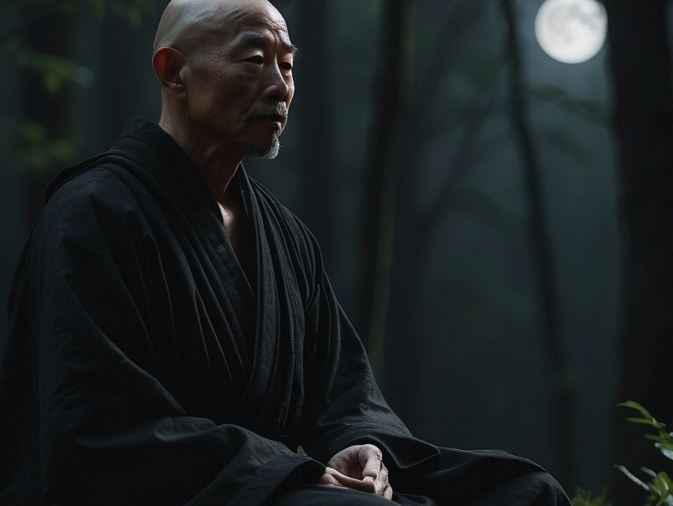
Why intelligent people support buddhism.
Buddhism is the only belief that is supported by science. Buddhism is supported by facts and knowlege, there is no imagniary god in buddhism. 1. Buddhist teachings, particularly regarding the mind, mindfulness, and the nature of reality, are increasingly supported by modern scientific findings in neuroscience, psychology, and quantum physics. Scientific research into meditation has validated its benefits on brain function, reducing depression, and slowing brain atrophy, leading many to view Buddhism as a "science of mind". 2. Key areas of alignment include: Neuroscience and Mindfulness: Studies show meditation can change the brain's physical structure and pathways, supporting claims that mental training can improve well-being. Impermanence and Interdependence: The Buddhist concept of anicca (impermanence) and paticcasamuppada (dependent origination) correlates with scientific understandings of a constantly changing, interconnected universe. 3. No-Self and Consciousness: Research suggests that the sense of self is not fixed in one area of the brain, aligning with the "no-self" (anatta) teaching, while studies on consciousness explore its non-localized nature. 4. Empirical Approach: No imaginary gods here. Buddhism is the only belief system that will not teach you to obey to believe in Blind faith. Both Buddhism and science emphasize personal experience and investigation rather than blind faith. 5. Impermanence and Physics: The Buddhist doctrine of Anicca (impermanence) is often compared to the modern scientific understanding that all matter is in a constant state of flux. Quantum physics, which reveals that subatomic particles are not solid entities but instantaneous events, resonates with the Buddhist concept of Emptiness (Sunyata)—the idea that nothing has a fixed, independent essence. 6. NO imaginary self in buddhism The "No-Self" Theory: In psychology and neuroscience, the idea that there is no central "CEO" or permanent soul—but rather a collection of changing mental and physical processes—aligns with the Buddhist teaching of Anatta (not-self).























































































































123 Portobello Road England GB 98765
© T. H. E. HOTEL